Snap, parent company of Snapchat, has launched a pair of smart glasses called Specs, which are a pricey purchase at £2,000 but offer remarkable power in a frame that previously would have had much less to offer. The new Specs smart glasses from Snap were teased earlier in the year but now they’re almost ready to ship. The company held a major unveiling event in Los Angeles on Wednesday evening and I was front of the line to try them on.
Unlike the smart glasses from Meta , some of which are made in conjunction with Ray-Ban, and forthcoming ones from Samsung and LG, the Specs have a fully functional computer built-in, and augmented reality (AR) lenses in the frames. This means they are lenses you can see through, but they have a screen inside which allows text and graphics to appear in front of the wearer’s eyes. There are lots of applications for what you can do and developers are creating new experiences, which Specs calls Lenses.
This means that they have a lot in common with Apple’s AR headset, the Vision Pro. However, the Specs are glasses, not a full-on headset, so you don’t look like a spaceman when wearing them in the street. Read more: Apple Vision Pro M5, reviewed They are also much lighter, making them more comfortable to wear for longer sessions than either the Apple Vision Pro or Samsung Galaxy XR headsets.
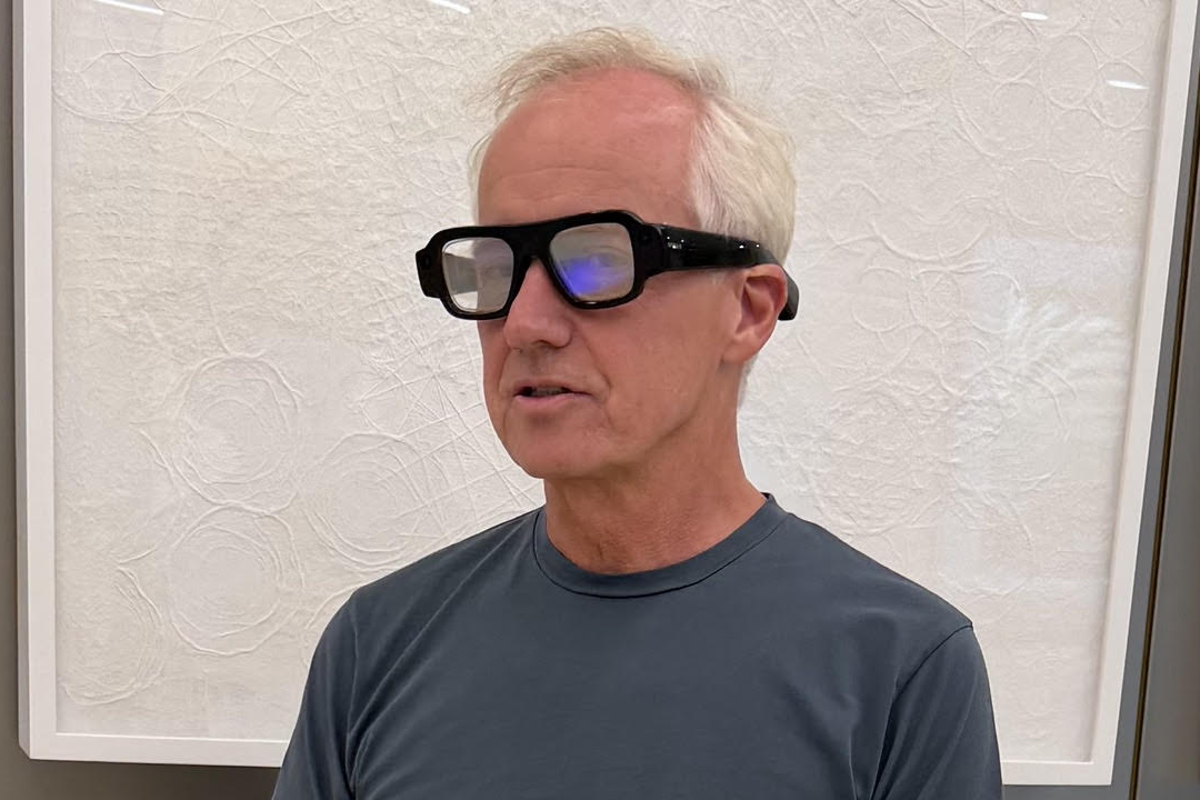
Specs smart glasses design The frames won’t be to everybody’s taste – you might feel they’re a little too Hollywood mogul (David Phelan/The Independent) There’s one frame shape to choose from, though it comes in two sizes. The frames are black and look distinctive and unique, with thick temples stretching behind your ears, crammed with technology. They are bulky, making them look like they’re going to be heavy, but they are deceptively light.
They weigh 132g, or 136g for the slightly larger frames. This weight is heavier than some regular glasses, but not only do these have an entire computer built in, the battery is in there, too. There’s no external battery as there is on the Vision Pro, for instance.
The frames won’t be to everybody’s taste – you might feel they’re a little too Hollywood mogul, for instance – but Snap’s CEO Evan Spiegel told me that there could be more frame styles in the future. Meta notably has more than half a dozen frame shapes to choose between. Specs smart glasses features During the demo, I was impressed by how easy they were to use (Specs) Unlike Meta’s glasses, the Specs don’t require a companion smartphone to deliver their smarts, though you need a wifi connection for many features, such as streaming Netflix.
You can connect your phone to Specs so that notifications appear and you can make calls, as you can on some other smart glasses. At my demo, I saw a bunch of capabilities, and I was impressed at how easy they were to use. The Specs are quick to set up for your eyes – you hold them in front of your face and once the glasses are calibrated there’s a chime – and you’re ready to go.
Look down at your left hand (or right if that’s better for you), and a series of circular icons seem to appear there. This is a kind of control centre and is intuitive and helpful. Snap calls this instinctual computing.
Tap one and a menu of option floats in front of your eyes. Choose the one you want by pointing and pinching your fingers together. The Specs browser launches a large virtual display that allows you to stream YouTube, for example.
Snap says the screen is the equivalent of looking at a 115in screen that’s 10ft away, though you can adjust this to suit. The Specs can give you directions as you walk and much more (Specs) The Specs can give you directions as you walk. Look down to see a map, and look forward to see pointers floating in the air.
There’s also a fun Harry Potter experience, which begins with you opening a letter (delivered by an owl that lands on your hand) confirming your acceptance to Hogwarts. Other experiences are remarkable, such as the simultaneous translation where someone can talk to you in another language and you’ll see the words transcribed in the air in your glasses in your own language. Unlike some other translation capabilities, if one person’s speaking French and another Mandarin Chinese, both will be rendered in English before your eyes.
Dominoes is another Lens and works when you’re with someone else wearing Specs. Essentially, you can play a 3D game of dominoes with your tiles appearing before you, your opponents’ tiles facing away and you place the dominoes on pretty much any flat surface in front of you. This more sociable element is a key part of Specs, where two people can be connected through two pairs of the smart glasses.
Specs smart glasses display and audio There are other lenses, such as one that can analyse your golf swing or a partnership with Tripadvisor that can float pointers in the air to show you locations of relevant restaurants and stores, say. You can also watch HBO Max, which has a dedicated lens and play Netflix through the browser. A partnership with Tripadvisor sees floating pointers in the air to show you locations of relevant restaurants and stores (Specs) Watching a movie or TV show looks great, best in low light.
You can play music through Spotify (and can turn off the display so you can just listen), which sounds good through the speakers in the temples above your ears. Specs have a camera on board so you can snap a photo or shoot video. When you do, a light flashes so people know you’re recording.
Evan Spiegel told me that the distinctive look of Specs means people will likely know you’re wearing smart glasses, unlike some brands that have tried to create smart glasses almost indistinguishable from regular ones. Will Snap’s spectacles take off? This is the first version, aimed at early adopters, perhaps.
But there is much to like here, providing you don’t mind spending £2,000. The capabilities of the glasses are already varied and impressive, but as more applications arrive, the Snap Specs could see significant potential reaped quickly. Pre-order now Read more: Best smart glasses, reviewed
Source: The Independent